Navigating the Studio: Key Lessons from my First Recording Project
- karen robin
- Mar 17
- 5 min read

Stepping into a professional recording studio as a rookie producer for the first time can be both exciting and overwhelming at the same time, as I was to find out. Over several recent projects though, I have gained valuable hands-on experience and slowly but surely I’ve been getting more and more comfortable in this environment.
The main recording project of my HNC, due in January this year, involved arranging for a client to come in to the studio to record a song and to produce a mix of this for them to give feedback. I am lucky to have friends in musical circles and finding someone up for the challenge was the straightforward part. In a group of three, my team and I got together to start planning our session. There was a lot to think about, a lot of decisions to make and I also wanted to be comfortable running a mock session before Jules, the client, stepped foot in the studio.

Choosing the Right Microphones for Vocals
One of the first challenges was selecting microphones that would capture the artist’s voice with warmth and clarity. Since the artist will be performing solo with only piano instrumentation, the vocals needed to feel intimate and rich with colour. Although at first glance, fewer parts/players to record seemed like a simpler option than, for example, a four-piece band, in fact with nowhere to hide, it might just be more challenging!
Without much hesitation, the microphone we opted to try first was the Neumann U87, a classic high-end studio microphone known for its warm vocal capture. There’s a reason this is one of the most iconic studio mics in the world; it has a reputation for adding depth and presence and this quickly became apparent to me during the record. Alongside the U87, we set up a Shure SM7B, another well-regarded vocal mic often used in professional studios. The SM7B has a smooth and natural sound and is said to be versatile across different vocal styles and ranges.
Using both mics during the record meant that we could compare them and decide in post-production which vocal sounded best. For me personally, I think the U87 was a clear winner, giving the artist’s voice a full-bodied and warm tone which as well as suiting her voice, really suited the track itself. The SM7B gave a slightly more clear and high frequency focused sound which I was less drawn to. Experimenting like this was a worthy exercise and with next to no more effort we could explore options post record.

Instrument Setup and Flexibility
As I mentioned the track we were going to be recording was stripped back and only needed vocals and piano. Initially, we miked up the studio’s upright piano, using a stereo pair of Schoeps cardioids. After some discussion and advice, we decided to use a Roland piano keyboard instead. This choice offered us several advantages:
Pick a Piano, Any Piano: Using MIDI would allow us to select from various piano sounds through a plugin, giving us precise control over the tone we wanted. We could, as my lecturer Graham pointed out, “play almost any piano in the world”, and it didn’t take much to convince us after that!
Consistency: The artist can record in MIDI, which would give us the flexibility to delete or tidy up mistakes or to make adjustments in post-production, for example lengthen/shorten notes.
Simplify: We didn’t have to worry about mic set ups or if the piano was completely in tune, all of this was taken care of by going electric.
We used the Kontakt plugin by Native Instruments, which provided us with a vast range of high-quality piano sounds. The “piano” that we ended up borrowing for the recording was Alicia Keys’ piano, which felt that it would be well suited to the ballad style we would be recording.
Recording Environment and Artist Comfort
The artist was recording in a professional studio for the first time, and I knew firsthand that this could be intimidating. There were three engineers present, two of whom were strangers to the artist, so in an effort to create a comfortable atmosphere, several decisions were made:
Recording Environment: Instead of moving between separate vocal and instrument rooms, we recorded everything in the same space. This helped maintain the flow and kept the artist relaxed and on her own during records.
Calm and Collected: I aimed to keep the session as calm as possible, and allowing her to take as many takes as required.
Communication: Since I was the only one who knew her, I did most of the liasing on the day, including any communication on Talkback. It was important to make the artist feel confident after each take, so I made sure I gave plenty of positive and productive feedback.
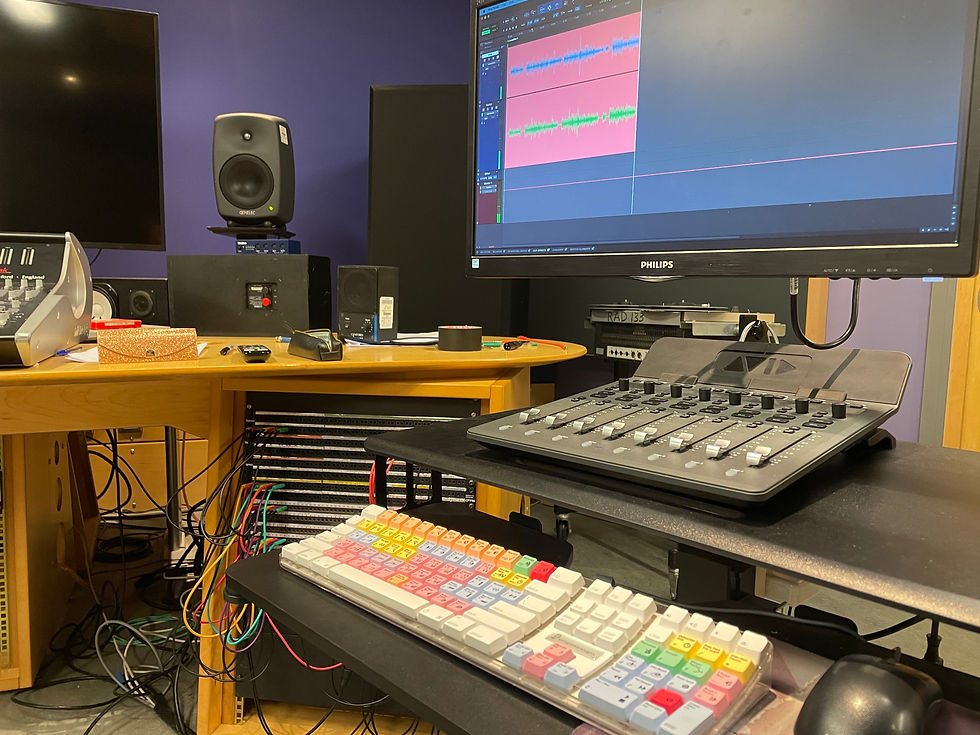
Team Collaboration and Decision-Making
Even with a small team, collaboration was essential. We shared ideas about our studio setup, mic placement, plugin choices, and how the session template should look and function. We were lucky that quite quickly our individual strengths were apparent and we were able to harness this throughout the project. This collective approach ensured we considered different perspectives and utilised our individual skillsets to achieve the results we were looking for.
Time Commitment and Project Management
I learned quite quickly that a recording project takes much more time than just the session itself. Preparation, setup, testing, and post-session editing all require significant time and effort. Outside of the session I dedicated time to:
Researching equipment and plugins
Planning studio setups
Constructing and testing our template session in Pro Tools
Running through setups to a timer to make sure we're well prepared for the live session and give ourselves enough time on the day

Practical Lessons during Studio Recording Projects
Some practical lessons that I took away from the experience include:
Test and experiment with multiple microphones to find the best match
Consider thinking outside the box like swapping a piano for a plugin for more control
Communicate clearly with the artist and team to build trust and a happy, productive working environment
Plan for extra time as more preparation time for this was needed than I anticipated
Team work while I was comfortable and well-suited to the communication aspect of the project, other members of my team thrived in different areas, for example live editing and showing aptitude with Pro Tools features. We all had a part to play in the team
Final Thoughts on Studio Recording
Having such hands-on experience in the studio so early on in my course has been a huge learning curve. This project has made me really appreciate the time and energy that is spent on a single track from start to finish. My focus in the studio has been on learning through doing. Experimenting, listening carefully, collaborating and practice, practice, practice. I look forward to my next session with Jules, where I will be going solo behind the desk. Watch this space...


Comments